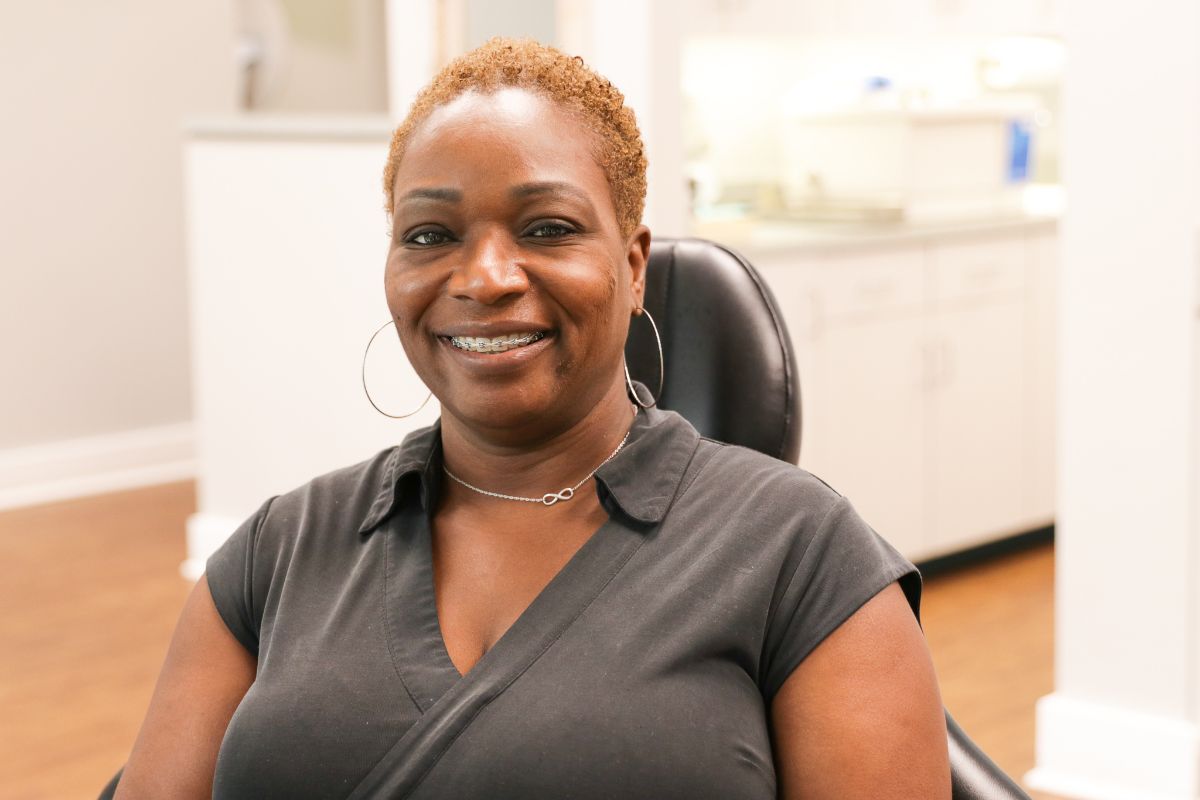
If your teeth have shifted since you had braces years ago, you’re far from alone. Retreatment options for adults are more discreet and comfortable than ever, and many adults find themselves considering a second round of orthodontic care as an adult. At Beim Orthodontics, Dr. Beim helps adults restore the straight smile they once had, often in less time than the first go-around. The technology has changed dramatically, and so has the everyday experience of wearing braces or aligners as a grown-up.
What Is Orthodontic Retreatment for Adults?
Orthodontic retreatment is a second round of care to straighten teeth that have shifted after prior braces or aligners. Adults typically pursue retreatment when teeth have crowded, gaps have reopened, or the bite has changed years after the original treatment. Retreatment is common, often shorter than the first time, and available at any age.
This shifting is called orthodontic relapse, and it happens more often than you might think. Teeth naturally want to move throughout life. Bone remodels, gums change, and small forces from chewing, clenching, or tongue posture can slowly nudge teeth out of alignment. If retainers weren’t worn consistently after the original treatment, relapse becomes even more likely.
Other common causes include:
- Stopping retainer wear too soon after the first treatment
- Losing or breaking a retainer and never replacing it
- Natural aging changes in the jaw and gums
- Wisdom teeth eruption pressing on other teeth
- Grinding or clenching habits that shift tooth position
The good news? Because your teeth were once straight, retreatment is often faster and less involved than a first-time case. Many adults finish in a fraction of the original treatment time, especially when relapse is minor.
Age is not a barrier. Healthy teeth can be moved at any age, and Dr. Beim regularly treats adults in their 30s, 40s, 50s, and beyond. What matters most is the health of your teeth and gums, not the number on your driver’s license.
Retreatment also gives you the chance to try modern options that may not have existed the first time you had braces. Clear aligners in Lake Mary, clear braces, and lighter, more comfortable metal braces have all advanced significantly. Many adults are pleasantly surprised at how different, and how much more comfortable, the experience feels the second time around.
How Adult Retreatment Works: The Process Step by Step
Adult retreatment follows a straightforward five-step process at Beim Orthodontics: a free consultation to evaluate relapse, digital scans and treatment planning, selecting the right appliance, active treatment, and long-term retention. Most adults with minor relapse finish in 6 to 12 months, while more significant shifting may take 12 to 24 months.
Here’s what to expect at each stage.
What Happens at Your Free Consultation and Evaluation?
Your first free consultation with Dr. Beim starts with a conversation. He’ll want to know when you originally had braces, how long you wore retainers, and what changes you’ve noticed. A clinical exam looks at tooth position, bite, gum health, and any wear patterns. This first free consultation sets the foundation for everything that follows, so bring any questions you’ve been wondering about.
How Do Digital Scans, X-rays, and Treatment Planning Work?
Digital scans and X-rays give Dr. Beim a precise picture of your teeth and jaw. From there, he’ll build a customized treatment plan that maps out exactly how your teeth need to move and what the finished result will look like. Seeing your plan laid out visually often helps adults feel confident about what’s ahead.
How Do You Choose an Appliance?
Together, you and Dr. Beim will choose the right appliance based on how much your teeth have shifted, your lifestyle, and your preferences. Options include:
- Clear aligners like Ormco Spark for discreet, removable treatment
- Clear braces for subtle fixed treatment that handles more complex movements
- Metal braces with modern Damon brackets for efficient results
What Happens During Active Treatment?
This is when your teeth actually move. Minor relapse cases, small amounts of crowding or a single tooth that’s rotated, often wrap up in 6 to 12 months. Larger changes involving bite correction or multiple teeth typically take 12 to 24 months. You’ll come in for visits every 4 to 8 weeks so Dr. Beim can check progress.
Why Is Retention With New Retainers So Important?
The final step is the most important for making your results last. New retainers are custom-made after treatment, and consistent wear prevents future shifting. Dr. Beim will walk you through a retainer schedule designed to protect everything you spent on retreatment for the long haul.
What’s the Difference Between Short-Term and Long-Term Relapse?
It helps to understand the difference between the two types of relapse:
- Short-term relapse happens within the first year or two after braces, usually from inconsistent retainer wear. Minor shifting like this is often correctable with a shorter treatment.
- Long-term relapse develops over many years. Natural aging, wisdom teeth, and lifestyle habits all contribute. These cases may require a full round of retreatment to fully correct.
Either way, the goal is the same: get your smile back to where it should be, and keep it there.
Benefits of Choosing Retreatment as an Adult
Retreatment as an adult delivers real, lasting benefits. Straighter teeth are easier to clean and chew with, modern appliances are far more discreet and comfortable, and treatment is often shorter than the first time. Beyond the practical wins, many adults describe a genuine confidence boost from loving their smile again after years of quietly wishing it looked different.
Here’s a closer look at what retreatment can do for you.
Better bite function and easier cleaning. When teeth are aligned properly, chewing feels more natural and cleaning is much easier. Straight teeth are simpler to brush and floss, which can support better daily hygiene and reduce hard-to-clean areas where plaque can collect.
Discreet options that fit any lifestyle come standard today. Clear aligners and clear braces let you go about your work, social life, and family time without feeling self-conscious. Most people won’t even notice you’re in treatment.
Retreatment is often shorter than the original treatment. Because your teeth were previously aligned, it usually takes less time and involves fewer visits. Many adults are surprised at how quickly they see results.
There’s a real confidence boost, too. Looking in the mirror and loving your smile again carries a certain power. Adults consistently tell Dr. Beim that finishing retreatment feels like reclaiming something they lost.
Modern appliances are more comfortable than you’d expect. If your last experience with braces was decades ago, you’re in for a pleasant surprise. Damon brackets, lighter wires, and smooth clear aligners have made treatment much gentler than it used to be.
Long-term health protection. Straight teeth are easier to maintain. That means fewer future issues, less time in the dental chair, and a smile that stays healthier as you age.
For many adults, retreatment is a life-changing path that pays dividends for years to come.
Comparing Retreatment Options: Aligners vs. Clear Braces vs. Metal Braces
When you weigh retreatment options for adults, the right appliance comes down to how much your teeth have shifted, your daily routine, and the goals you have for your smile. Here’s a side-by-side comparison to help you understand your options.
| Feature | Clear Aligners | Clear Braces | Metal Braces |
|---|---|---|---|
| Visibility | Nearly invisible | Blend with teeth | Most visible |
| Removable | Yes | No | No |
| Best for | Mild to moderate relapse | Moderate to complex cases | Significant relapse or bite issues |
| Comfort | Smooth plastic, no wires | Smooth ceramic brackets | Modern Damon brackets, lighter wires |
| Cleaning | Easiest, remove to brush | Requires care around brackets | Requires care around brackets |
| Cost | Typically higher | Mid-range | Most cost-effective |
| Treatment time | Often 6-18 months | Often 12-24 months | Often 12-24 months |
Clear Aligners
Clear aligners like Ormco Spark are removable trays that gradually move your teeth into place. They’re a favorite among adults because they’re discreet, comfortable, and easy to fit into a busy schedule. You take them out to eat and brush, then pop them back in. Clear aligners work best for mild to moderate relapse where teeth need to move without major bite correction. Learn more about Lake Mary clear aligners and aligners for teens.
Clear Braces
Clear braces at Beim Orthodontics are designed to be less noticeable on your teeth than metal braces. The ceramic brackets blend in with your natural tooth color, so people usually don’t notice them from a distance. Clear braces are a strong choice when you need more complex tooth movements but still want a subtle look.
Metal Braces With Damon Brackets
Modern metal braces are far less obvious, lighter, and more comfortable than the braces you may remember. Dr. Beim uses Damon brackets, which use a sliding door mechanism instead of elastic ties. This means you’ll spend less time in braces at our office, and the time you do spend is more comfortable. Metal braces are the most cost-effective option and handle significant relapse or bite correction with excellent results. Learn more about Lake Mary braces.
Carriere Motion Appliance for Bite Correction
If your relapse includes bite issues, Dr. Beim may recommend the Carriere Motion Appliance before aligners or braces. This small appliance corrects the bite first, then aligners or braces finish the job. It’s an efficient way to handle complex cases without extending treatment unnecessarily.
Matching Your Option to the Severity of Relapse
- Minor relapse (slight crowding, small gap): Clear aligners are usually a great fit.
- Moderate relapse (multiple teeth shifted, mild bite change): Clear aligners or clear braces both work well.
- Significant relapse (major crowding, bite correction needed): Metal braces or clear braces, sometimes paired with the Carriere Motion Appliance, deliver the best results.
Dr. Beim will walk you through the pros and cons of each during your first free consultation.
Cost Factors for Adult Retreatment
Retreatment cost depends on several factors: the severity of your relapse, how long treatment will take, the type of appliance you choose, and whether new retainers are included in your final plan. Insurance may cover part of the cost, and flexible payment options make retreatment manageable for most budgets. A free consultation gives you a personalized estimate.
Here’s a closer look at what shapes the total cost.
Severity of relapse and treatment length. Minor shifting that takes a few months costs less than a full round of retreatment lasting a year or more. The more movement required, the higher the total cost.
Type of appliance. Clear aligners and clear braces typically cost more than metal braces because of the materials and technology involved. Metal braces with Damon brackets are usually the most cost-effective option while still delivering excellent results.
Insurance coverage. Some dental insurance plans include orthodontic benefits, and those benefits sometimes apply to retreatment. Every plan is different, so our team will help you understand what your insurance covers before treatment begins.
Flexible payment options. Beim Orthodontics offers flexible payment options so you can spread the cost out over time. This makes retreatment realistic for most families, even without full insurance coverage.
New retainers. Retainers are essential for keeping your results, so they’re factored into the total plan. Investing in quality retainers protects everything you spent on retreatment.
Free consultation for a personalized estimate. No two cases are alike, and only an in-person evaluation can give you an accurate number. Your first free consultation with Dr. Beim includes a full treatment plan and cost breakdown, so you can make an informed decision without any pressure.
Are You a Candidate for Retreatment? Signs You May Need It
A few common signs point to teeth that have shifted enough to warrant a second look. If any of these sound familiar, retreatment may be worth exploring.
Signs you may benefit from retreatment:
- Crowding along the front teeth, especially the lower ones
- Gaps that have reopened between teeth
- A bite that feels different when you chew
- One or more teeth that have rotated or tilted
- Retainers that no longer fit or haven’t been worn in years
- Uneven tooth wear from bite changes
- Difficulty flossing where teeth have crowded together
Good candidates for retreatment have healthy teeth and gums. Any active cavities or gum disease should be treated first, since orthodontic movement works best in a healthy mouth. Dr. Beim will check your oral health during the free consultation and work with your general dentist if needed.
Age truly isn’t a barrier. Adults of all ages qualify for retreatment, whether you’re 25 or 75. Dr. Beim has helped adults regain their smiles well into their retirement years, drawing on specialized orthodontic training and years of hands-on experience.
Retreatment vs. Simply Replacing a Retainer
Sometimes teeth have shifted only slightly, and a new retainer alone can hold them in place. Other times, teeth have moved enough that active treatment is needed before a retainer can help. The line between these two situations isn’t always obvious from home. That’s why a free consultation is the best next step. Dr. Beim will look at your teeth, listen to your goals, and let you know whether a new retainer will do the trick or whether full retreatment is the better call.
Adult Retreatment in Lake Mary
If you are considering retreatment, our Lake Mary orthodontics team can help you compare your options clearly. Some adults are best served with clear aligners, while others get better results from clear braces, metal braces, or a combination approach. The right plan depends on your bite, tooth movement needs, and lifestyle.
Beim Orthodontics also supports patients looking for an orthodontist in Lake Mary, orthodontics for all ages, orthodontics for teens, and treatment options designed around long-term smile health.
Ready to see what retreatment could look like for you? Contact us, schedule a free consult, or start with a virtual consult from home.

Frequently Asked Questions About Adult Retreatment
Why did my teeth shift after braces?
Teeth shift for several reasons. The most common cause is inconsistent retainer wear, which allows teeth to slowly drift back toward their original positions. Natural aging also plays a role, as bones and gums change over time. Wisdom teeth eruption, grinding, and habits like tongue thrusting can also contribute to relapse. Understanding what caused your shifting helps Dr. Beim build a plan that keeps it from happening again.
Will I need braces again, or can I use clear aligners?
It depends on how much your teeth have shifted. Minor to moderate relapse is often correctable with clear aligners like Ormco Spark. More significant shifting or bite issues may need clear braces or metal braces for the best result. Dr. Beim will review your options during your free consultation and recommend the approach that fits your case and lifestyle.
How long does retreatment take compared to the first time?
Retreatment is usually faster than the original treatment because your teeth were previously aligned. Minor relapse cases often finish in 6 to 12 months, while more involved cases take 12 to 24 months. Your exact timeline depends on how much movement is needed and which appliance you choose.
Can I prevent future relapse?
Yes. The single most important thing you can do is wear your retainer as prescribed. Dr. Beim will give you a retainer schedule after treatment, and following it consistently keeps your results in place. Regular dental checkups also help catch any early signs of shifting before they become a bigger issue. Building retainer wear into your nightly routine is the easiest way to make it stick.
Does insurance cover a second round of orthodontics?
Some dental insurance plans include orthodontic benefits that can apply to retreatment, but coverage varies widely by plan. Many plans have a lifetime orthodontic maximum, so if you used it during your first treatment, it may not apply again. Our team will help you check your benefits and explore flexible payment options if insurance doesn’t cover the full amount.
Is retreatment more uncomfortable than the initial treatment?
Most adults find retreatment more comfortable than their original braces. Today’s appliances, including Damon brackets and smooth clear aligners, are lighter and gentler than older technology. You may feel mild pressure when a new aligner is placed or after an adjustment, but it’s typically brief and manageable.
What’s the first step to getting started with retreatment?
The first step is simple: schedule a free consultation with Dr. Beim. Your teeth don’t have to stay the way they are now. If they’ve shifted since your first round of braces, retreatment at Beim Orthodontics can help you love your smile again, and we’d be glad to help you get started. Dr. Beim and our team will look at your teeth, listen to what you want, and lay out a clear plan so you know exactly what’s possible.